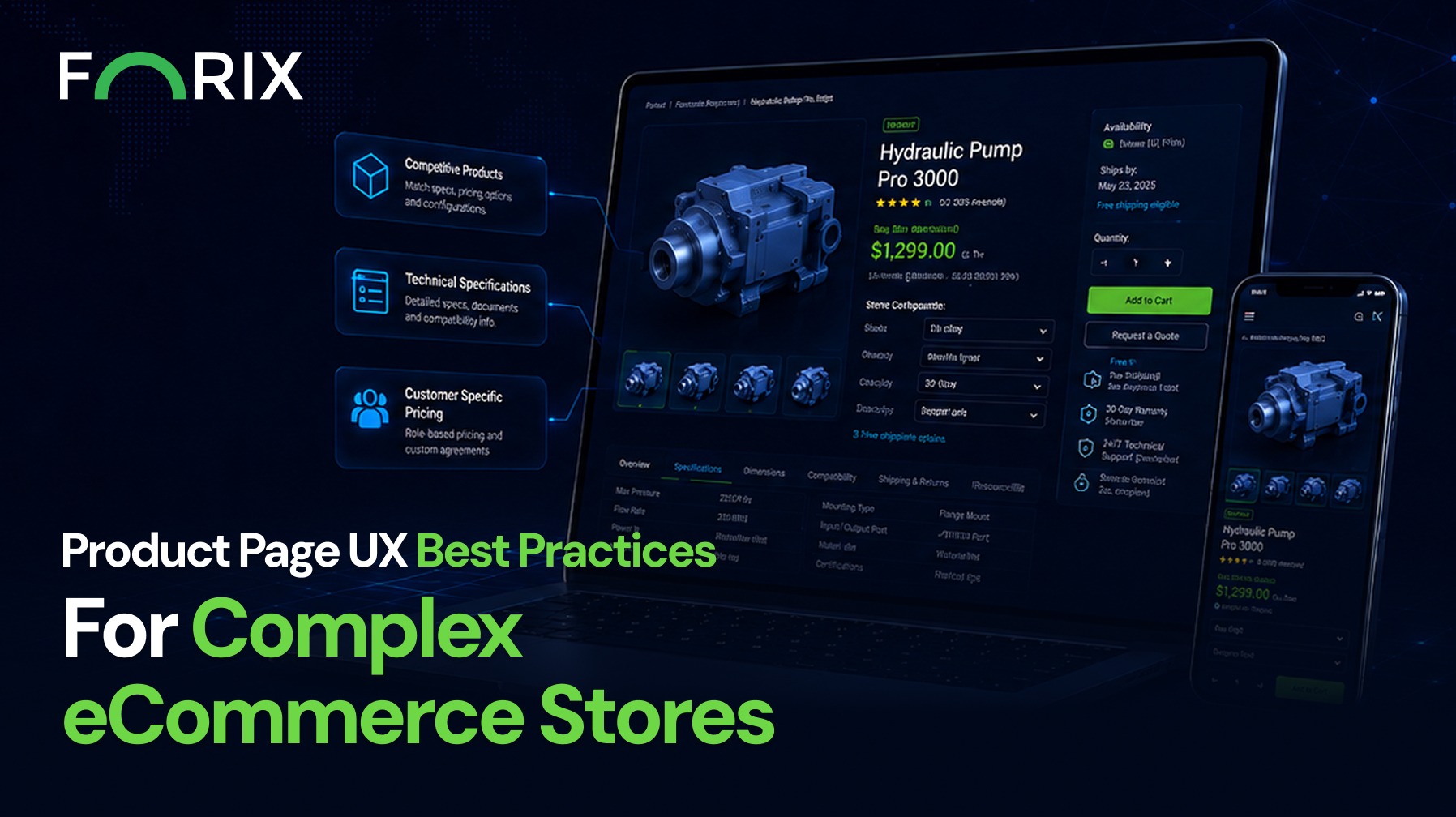
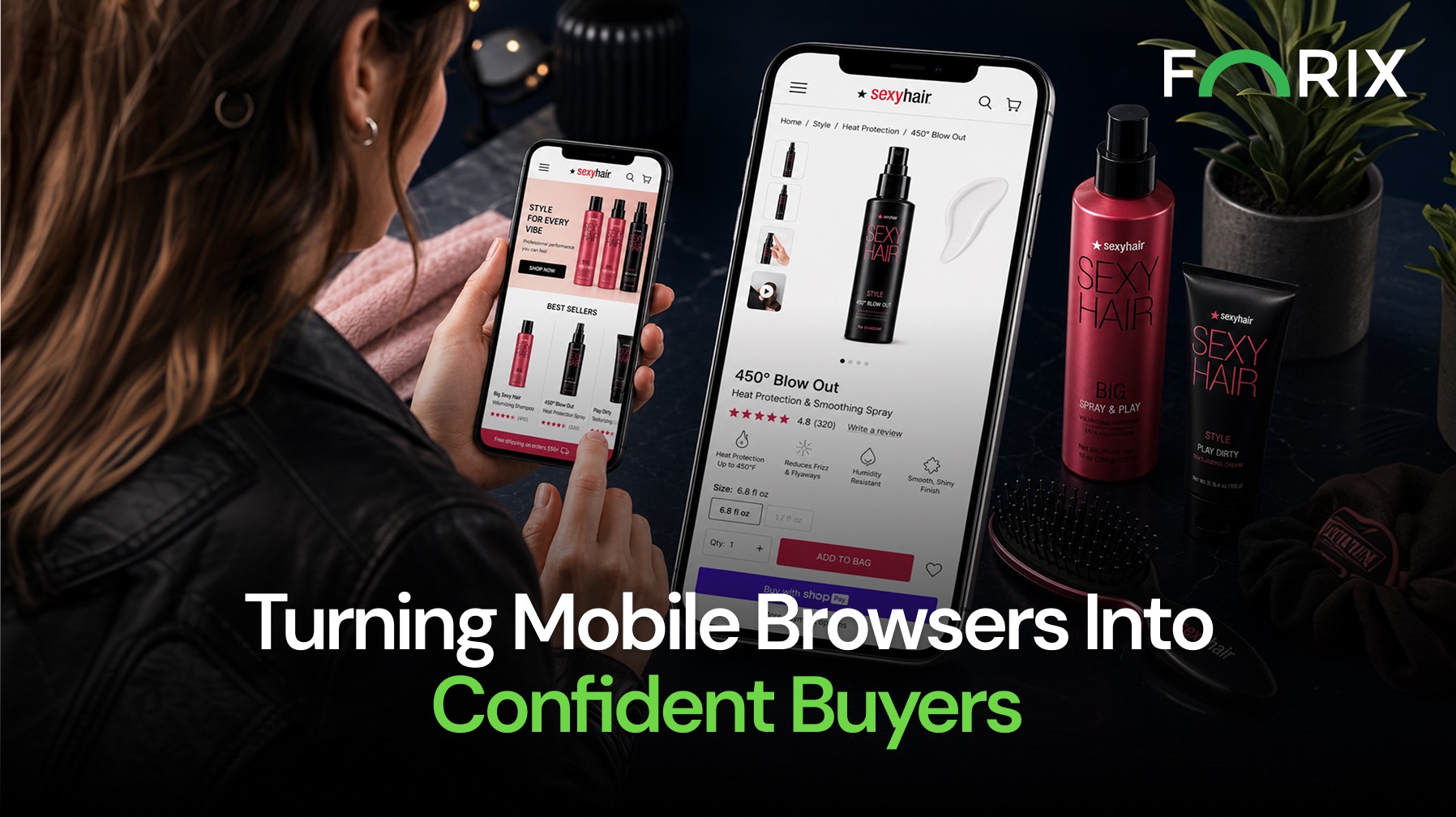
Product pages are where shoppers decide whether to buy, compare, save for later, or leave. For complex eCommerce stores, that decision is often harder because products may include multiple variants, technical specifications, customer-specific pricing, inventory rules, or detailed compatibility requirements.
A strong product page should make the buying decision easier. It should help shoppers quickly understand:
What the product is
Whether it fits their needs
What options are available
When it can be delivered
Why they should trust the purchase
Learn how Forix’s Design and Strategy services help eCommerce retailers create product page experiences that simplify complex buying decisions and improve ecommerce performance.
Why Product Page UX Matters for eCommerce Stores
platforms such as Shopify and Magento is built for flexibility. It supports large catalogs, configurable products, customer groups, custom pricing, and advanced integrations. That flexibility is valuable, but it can also create clutter if product pages are not planned well.
An eCommerce product page may need to show:
Product variants
Technical specifications
Inventory status
Shipping rules
Related products
Reviews and trust signals
B2B pricing or account-based content
The goal is not to remove important information. The goal is to organize it clearly so shoppers can find the right details at the right time.
Start With Clear Product Information
The top of the product page should answer the shopper’s first questions quickly. Product name, images, price, key details, availability, and the main call to action should be easy to see and understand.
For complex products, avoid showing every detail at once. Instead, group content by priority:
Key selling points near the top
Main specifications in a scannable format
Detailed product data in tabs or expandable sections
Support content such as manuals, sizing guides, or compatibility notes lower on the page
This helps shoppers review the product without feeling overwhelmed.
Make Variant Selection Easy
Configurable products are common in eCommerce stores. Size, color, material, finish, capacity, and compatibility options should be simple to use.
A good variant experience should:
Show available and unavailable options clearly
Update the price, image, SKU, and availability when options change
Explain restricted combinations in plain language
Reduce the number of steps needed to select the right product
For products with many options, guided selectors or comparison tools can help shoppers choose with more confidence.
Use Product Media to Build Confidence
Product media should do more than make the page look polished. It should help shoppers understand the product before they buy.
Useful media may include:
Multiple product angles
Close-up detail shots
Lifestyle or in-use images
Size and scale references
Diagrams or installation visuals
Short product videos
For eCommerce stores, image quality must be balanced with page speed. Large media files should be optimized so the page remains fast, especially on mobile.
Design for Mobile Shoppers
Many customers research and compare products on mobile devices. Even if they complete the purchase later on desktop, the mobile product page still shapes their decision.
Mobile product pages should make it easy to:
Swipe through images
Review product options
See pricing and availability
Read key details
Add products to cart
Find shipping, return, and support information
Accordions can help organize long content on mobile, but essential details should not be buried too deeply.
Add Trust Signals Near the Buying Decision
Trust signals should appear close to the point of purchase. Shoppers need reassurance before they add to cart, especially for expensive, technical, or highly specific products.
Helpful trust signals include:
Reviews and ratings
Return policy details
Warranty information
Secure checkout messaging
Shipping estimates
Inventory status
Support or live chat options
For eCommerce stores connected to ERP, PIM, OMS, or shipping systems, accuracy is critical. Product data, pricing, availability, and delivery information should stay consistent across the experience.
Use Cross-Sells Without Creating Distraction
Product recommendations can improve average order value, but they should support the buying journey. They should not interrupt the shopper before they understand the main product.
Strong Magento merchandising may include:
Compatible accessories
Replacement parts
Frequently bought together products
Similar products
Complete-the-set recommendations
Clear labels make recommendations more useful. For example, “Compatible Accessories” is more helpful than a generic “You May Also Like.”
Conclusion
The best eCommerce product pages turn complexity into clarity. They organize product information, simplify variant selection, support mobile shoppers, build trust, and guide customers toward the next step.
For complex eCommerce stores, product page UX is not only a design task. It requires strategy, clean product data, eCommerce expertise, and ongoing optimization.
Forix helps eCommerce retailers identify friction, improve product page experiences, and build scalable UX systems that support long-term growth. To improve your product pages with a more strategic, conversion-focused approach, contact Forix today.
Why is product page UX important for eCommerce stores?
eCommerce stores often manage complex products, large catalogs, and advanced pricing or inventory rules. Strong UX helps shoppers understand products faster and make more confident buying decisions.
What should appear near the top of a product page?
The top section should include the product name, main image, price, key details, availability, product options, and add-to-cart button.
How can eCommerce stores improve configurable product UX?
They should make options clear, show unavailable combinations, update product details dynamically, and provide guidance for products with many variants.
What trust signals should product pages include?
Useful trust signals include reviews, ratings, warranty information, return policy details, secure checkout messaging, shipping estimates, and customer support options.
How does Forix help improve product page UX?
Forix reviews product page structure, product data, configuration, design patterns, and customer behavior to identify improvements that support usability and conversion.
From flat sales to explosive sales growth - here's what happens when you partner with Forix
Partnering with Forix was hands down the best decision I’ve made for my store. The
redesign completely
transformed my site — it looks like a million dollars, yet I paid only a fraction of
what I expected.
Even better, sales started climbing almost immediately. Their process was simple,
transparent, and
focused on results. I only wish I had done it sooner.
Sarah Mitchell,Owner
“The free website report from Forix opened our eyes to issues we didn’t even know were costing us sales. The recommendations were clear, actionable, and backed by data. After implementing just a few of their suggestions, we saw a noticeable lift in conversions within weeks. Forix didn’t just give us a report—they gave us a roadmap to growth.”
Lena Hoffman, Director of eCommerce
“The redesign was exactly what my business needed. Clean, mobile-friendly, and conversion-focused. Sales are up 35% since launch.”
Ethan Carter, Founder
“Forix made our Magento to Shopify migration completely stress-free. Every product, customer record, and integration was moved accurately, and the new store’s design is sleek and user-friendly. Our team can now focus on growing sales instead of worrying about technical issues.”
Emily Rivera, Head of Digital Operations
198%
Conversion increase
32%
Transaction increase
30%
Time on site increase
28%
Conversion increase
92%
Revenue increase
87%
Engagement increase
Ready to See the Difference?
Your next big sales boost could start with our free website report. Let us show you the
untapped
potential in your store.
Complete the form below and our team will reach out to get started.
Thank you!
We’ve received your request for a free website report. Our team will be in touch shortly to gather a few details so we can begin your site analysis.
Click Here To
Get My Free Website Report Now
Claim Your FREE Webpage Design and Sell More ASAP
Complete the form below and our team will reach out to get started.
Thank you!
We’ve received your request for a free webpage design. Our team will be in touch shortly to gather a few details so we can begin your page redesign.
Click Here To
Get My Free Webpage Design Now
Claim Your FREE Migration Assessment and Sell More ASAP
Complete the form below and our team will reach out to get started.
Thank you!
We’ve received your request for a free Magento-to-Shopify migration assessment. Our team will be in touch shortly to gather a few details so we can begin building your comprehensive migration plan.
Click Here To
Get My Free Migration Assessment Now
Claim Your FREE Site Report and Sell More ASAP (a $2,000 value).
Complete the form below and our team will reach out to get started.
Thank you!
We’ve received your request for a free website report. Our team will be in touch shortly to gather a few details so we can begin your site analysis.