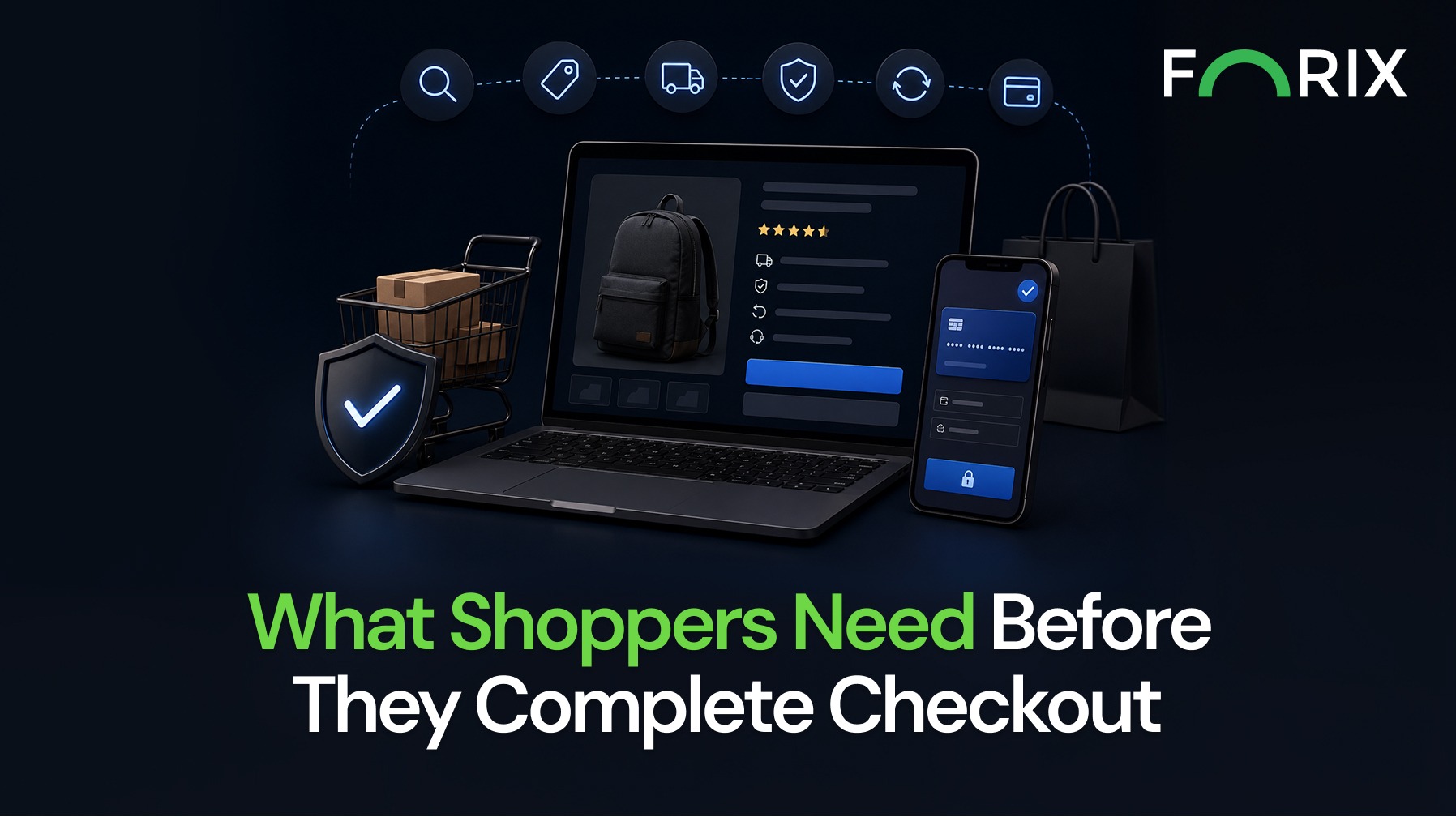
For many eCommerce brands, checkout abandonment is often treated as a checkout-page issue. In reality, the decision to complete a purchase usually happens earlier in the journey.
Customers need confidence before they commit. They want to understand what they are buying, how much it will cost, when it will arrive, whether the brand is trustworthy, and what happens if something goes wrong. When those answers are unclear, shoppers hesitate—and hesitation leads to lower conversion rates.
A smooth checkout experience is important, but it cannot fix uncertainty created earlier. If product details are unclear, shipping costs appear too late, or return policies are hard to find, shoppers may enter checkout with doubts.
Checkout readiness means giving customers clarity, trust, and convenience before they are asked to pay. It focuses on reducing friction across the entire shopping experience, not just the final step.
This includes product page content, cart design, shipping messaging, promotions, payment options, trust signals, and support access. Improving these areas before checkout is often the most effective way to reduce hesitation and improve conversions.
Clear Product Information
Before completing checkout, shoppers need to feel confident that the product meets their needs. Strong product pages answer key questions quickly.
Shoppers should be able to confirm:
Product dimensions, materials, or ingredients
Size, fit, or compatibility
Care instructions or usage guidance
Product images, videos, or comparisons
Customer reviews or FAQs
Product pages should be easy to scan, with important details clearly visible. The faster shoppers understand the product, the more likely they are to move forward.
Transparent Pricing and Fees
Unexpected costs are a leading cause of abandonment. Customers want to understand the full cost before entering payment details.
Pricing should clearly include:
Product price
Shipping costs or free shipping thresholds
Taxes or estimated fees
Discount rules and promo limitations
Subscription terms, if applicable
Clear pricing builds trust and prevents frustration. Messaging about costs should appear before checkout whenever possible.
Delivery Expectations
Shipping speed and reliability influence purchase decisions. Customers want to know when their order will arrive and what options are available.
Stores should communicate delivery expectations throughout the journey. Estimated delivery dates, cutoff times, and tracking details help reduce uncertainty.
Consistency is key. Conflicting shipping information across pages can create doubt and hurt conversions.
Trust Signals That Feel Credible
Before submitting payment, shoppers need reassurance that the brand is legitimate. Trust signals reduce perceived risk, especially for first-time buyers.
Effective trust signals include:
Customer reviews and ratings
Secure checkout messaging
Recognizable payment methods
Return policy and warranty links
Contact information or support access
Press mentions, certifications, or brand credibility indicators
The goal is not to overwhelm shoppers with badges. The goal is to answer the question: “Can I trust this store?”
Simple Return and Support Access
Shoppers are more likely to complete checkout when they understand what happens after purchase. A clear return policy reduces risk.
Return windows, refund methods, and support channels should be easy to find. If live chat, email, or self-service returns are available, they should be visible before checkout.
Support access is especially important for complex or high-value purchases. One unanswered question can stop a sale.
Payment Flexibility
Payment options can directly impact conversion. Shoppers expect fast, familiar, and secure methods.
This may include credit cards, digital wallets, buy now pay later options, and accelerated checkout methods. The right mix depends on the audience and product type.
Flexible payment options reduce friction and help shoppers complete purchases more easily, especially on mobile.
A Better Checkout Starts Before Checkout
Improving checkout performance requires more than simplifying forms. Brands need to understand what shoppers are missing before they decide to buy.
A CRO review should evaluate:
Product page clarity
Cart and checkout friction
Shipping and delivery messaging
Promotion visibility
Trust signals and support access
Mobile checkout experience
Payment method availability
Small improvements across these areas can create a stronger buying experience and lead to measurable conversion gains.
Conclusion
Shoppers complete checkout when they feel informed, confident, and supported. The opportunity for eCommerce brands is to remove doubt before it leads to abandonment.
Forix partners with eCommerce retailers to improve conversion performance through strategic CRO optimization, and ongoing support. If your checkout rate is not where it should be, the Forix team can help identify the friction points that matter most and build a clearer path to purchase.
What do shoppers need before they complete checkout?
Before completing checkout, shoppers need clear product information, transparent pricing, delivery expectations, trust signals, return policy access, support options, and convenient payment methods. These elements help reduce uncertainty and make the purchase feel easier and less risky.
Why do shoppers abandon checkout?
Shoppers often abandon checkout because of unexpected costs, unclear shipping timelines, limited payment options, lack of trust, or unanswered questions about the product, return process, or support options. In many cases, hesitation begins before the shopper reaches the final checkout step.
How can eCommerce brands improve checkout conversions?
eCommerce brands can improve checkout conversions by optimizing product pages, making fees clear earlier, improving cart messaging, adding credible trust signals, offering flexible payment options, and using CRO analysis to identify friction across the buying journey.
Are trust signals important before checkout?
Yes. Trust signals help shoppers feel confident that the store is legitimate, secure, and reliable. Reviews, return policy links, warranty details, recognizable payment methods, and accessible contact information can all support purchase confidence.
Should CRO focus only on the checkout page?
No. CRO should evaluate the full purchase journey. Product pages, cart design, shipping details, promotions, trust signals, mobile experience, payment options, and support access all influence whether shoppers complete checkout.
From flat sales to explosive sales growth - here's what happens when you partner with Forix
Partnering with Forix was hands down the best decision I’ve made for my store. The
redesign completely
transformed my site — it looks like a million dollars, yet I paid only a fraction of
what I expected.
Even better, sales started climbing almost immediately. Their process was simple,
transparent, and
focused on results. I only wish I had done it sooner.
Sarah Mitchell,Owner
“The free website report from Forix opened our eyes to issues we didn’t even know were costing us sales. The recommendations were clear, actionable, and backed by data. After implementing just a few of their suggestions, we saw a noticeable lift in conversions within weeks. Forix didn’t just give us a report—they gave us a roadmap to growth.”
Lena Hoffman, Director of eCommerce
“The redesign was exactly what my business needed. Clean, mobile-friendly, and conversion-focused. Sales are up 35% since launch.”
Ethan Carter, Founder
“Forix made our Magento to Shopify migration completely stress-free. Every product, customer record, and integration was moved accurately, and the new store’s design is sleek and user-friendly. Our team can now focus on growing sales instead of worrying about technical issues.”
Emily Rivera, Head of Digital Operations
198%
Conversion increase
32%
Transaction increase
30%
Time on site increase
28%
Conversion increase
92%
Revenue increase
87%
Engagement increase
Ready to See the Difference?
Your next big sales boost could start with our free website report. Let us show you the
untapped
potential in your store.
Complete the form below and our team will reach out to get started.
Thank you!
We’ve received your request for a free website report. Our team will be in touch shortly to gather a few details so we can begin your site analysis.
Click Here To
Get My Free Website Report Now
Claim Your FREE Webpage Design and Sell More ASAP
Complete the form below and our team will reach out to get started.
Thank you!
We’ve received your request for a free webpage design. Our team will be in touch shortly to gather a few details so we can begin your page redesign.
Click Here To
Get My Free Webpage Design Now
Claim Your FREE Migration Assessment and Sell More ASAP
Complete the form below and our team will reach out to get started.
Thank you!
We’ve received your request for a free Magento-to-Shopify migration assessment. Our team will be in touch shortly to gather a few details so we can begin building your comprehensive migration plan.
Click Here To
Get My Free Migration Assessment Now
Claim Your FREE Site Report and Sell More ASAP (a $2,000 value).
Complete the form below and our team will reach out to get started.
Thank you!
We’ve received your request for a free website report. Our team will be in touch shortly to gather a few details so we can begin your site analysis.