A strong Shopify store does more than look polished. It helps shoppers find products quickly, understand value clearly, and complete purchases with minimal friction. When UX supports conversion rate optimization, every page has a clearer purpose.
For Shopify retailers, small friction points can affect performance. A confusing menu, slow product page, unclear shipping message, or complicated checkout can cause hesitation. The goal is not to redesign for appearance alone. The goal is to make the path to purchase easier and more persuasive.
Forix’s Conversion Rate Optimization services help eCommerce brands improve performance through data-driven strategy, optimization, and ongoing platform support. For Shopify stores, UX should be treated as a measurable growth lever, not just a design concern.
Why UX Matters for Shopify Conversion Rates
Conversion rate optimization starts with understanding how shoppers behave. UX shapes that behavior into a clear journey.
A well-optimized Shopify experience helps shoppers:
Find products faster
Understand product value
Compare options with confidence
Add items to cart easily
Complete checkout with fewer interruptions
Strong UX supports clarity, confidence, and momentum. Shoppers should know where they are, what they are buying, and what step comes next. When the experience feels simple and predictable, visitors are more likely to keep moving toward purchase.
Improve Navigation and Product Discovery
Navigation is one of the first UX areas that affects conversions. If shoppers cannot find the right category, use filters, or return to a previous browsing path, they may leave before reaching a product page.
Shopify retailers should organize menus around customer intent, not internal catalog structure. Category labels should be clear, concise, and easy to scan.
Strong product discovery often includes:
Simple top-level navigation
Clear collection names
Relevant filters and sorting
Prominent site search
Helpful product recommendations
Filters should reflect how shoppers evaluate products, such as size, color, price, use case, material, availability, fit, or brand. Search should also account for common terms, misspellings, synonyms, and merchandising priorities.
Make Product Pages Easier to Evaluate
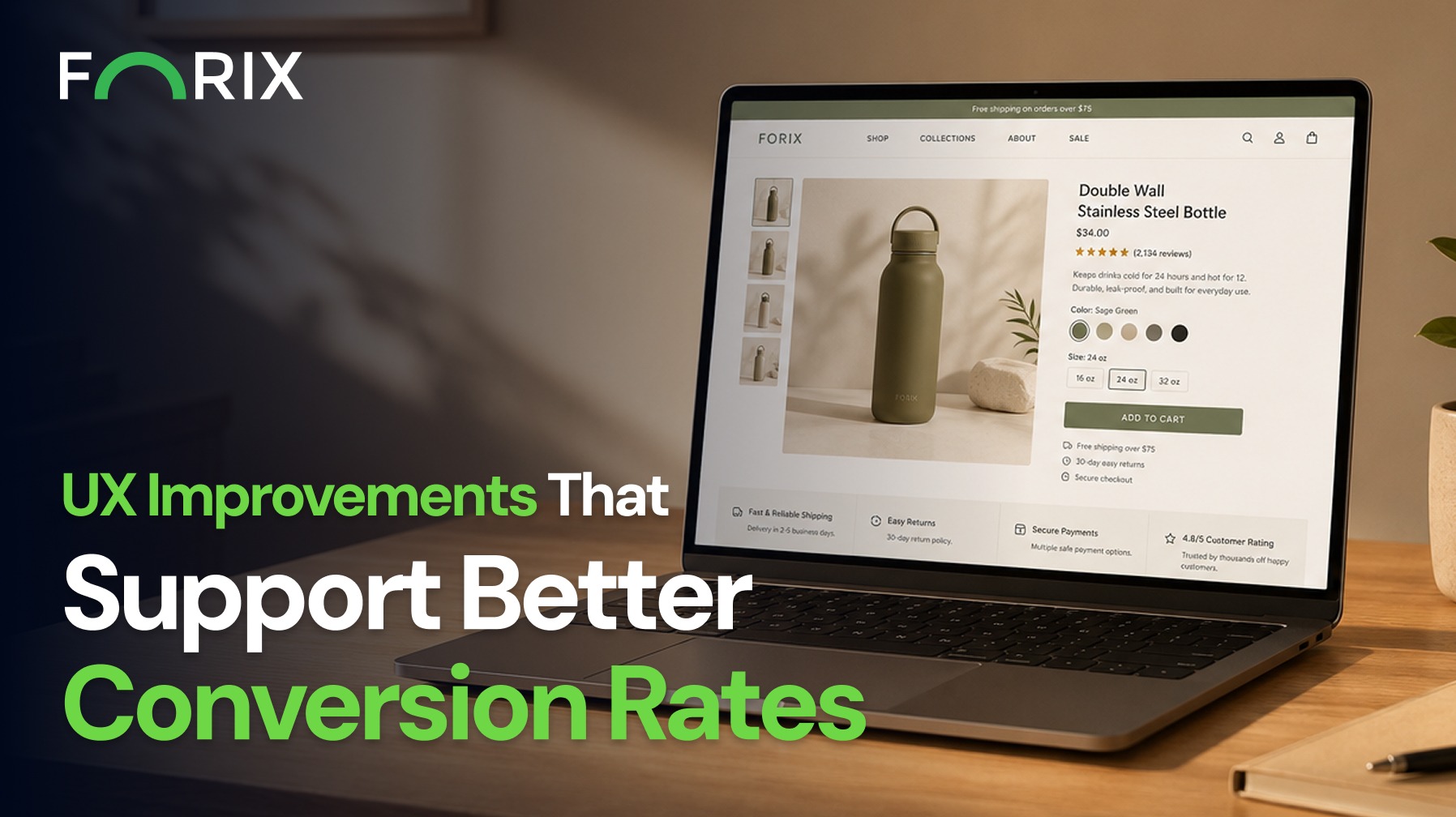
Product detail pages are where many conversion decisions happen. A strong Shopify PDP should answer the shopper’s key questions before they have to search for them.
A conversion-focused PDP should include clear product titles, benefit-driven descriptions, quality images, pricing, variant options, availability, shipping details, return information, reviews, trust signals, and a visible add-to-cart button.
The goal is to reduce uncertainty. If shoppers have to work too hard to understand a product, they may delay the purchase or leave the site.
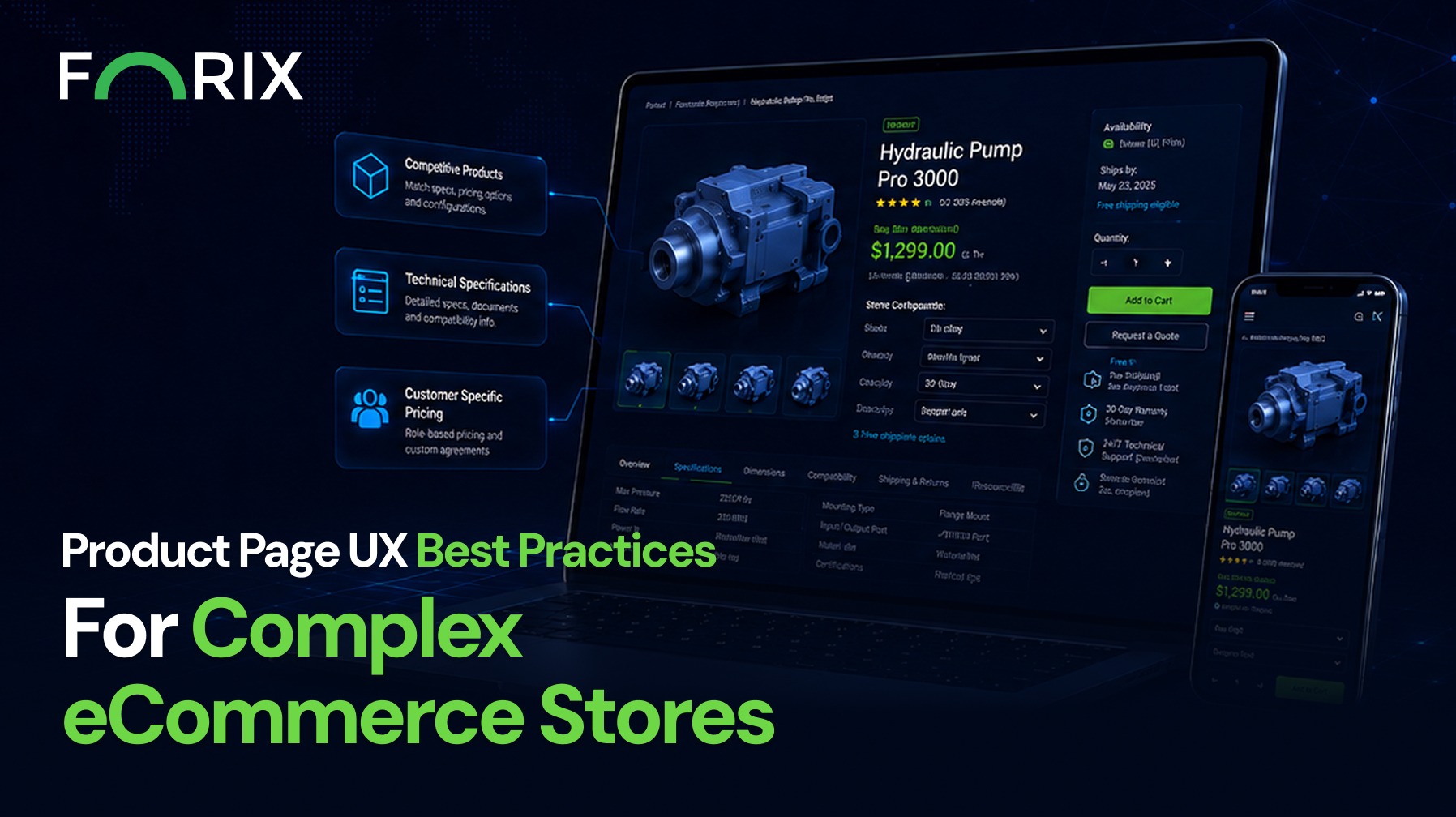
For complex products, UX can be improved with size guides, comparison tables, material details, product videos, FAQs, warranty information, or care instructions. Each element should help the customer make a more confident decision.
Optimize Mobile Shopping Journeys
Many Shopify customers browse and purchase on mobile devices. A desktop-first design can create friction on smaller screens.
Common mobile UX issues include hard-to-tap buttons, slow-loading images, crowded menus, hidden product details, and forms with too many required fields.
Mobile UX should prioritize speed, clarity, and simplicity. Key actions should be easy to reach. Product details should be organized into scannable sections. Forms should ask only for necessary information.
For Shopify stores, mobile improvements can have a direct impact on conversion performance because mobile traffic often represents a large share of total sessions.
Reduce Cart and Checkout Friction
Cart and checkout UX should make the final decision feel simple. Any uncertainty at this stage can lead to abandonment.
Retailers should make key details clear before checkout, including shipping costs, delivery timelines, promo code rules, return policies, payment options, taxes, fees, free shipping thresholds, and order summaries.
Shopify provides a reliable checkout foundation, but the surrounding experience still matters. Cart drawers, cart pages, upsells, cross-sells, and checkout messaging should be tested carefully. The objective is to support the purchase without overwhelming the customer.
Use Data to Prioritize UX Improvements
Not every UX issue has the same business impact. Shopify brands should use data to identify where users drop off and which improvements should come first.
Useful inputs include Shopify analytics, GA4 reports, heatmaps, session recordings, site search data, checkout behavior reports, customer service questions, product reviews, and post-purchase feedback.
If product page traffic is strong but add-to-cart rate is low, the issue may involve product information, pricing clarity, imagery, or CTA placement. If carts are created but checkout completion is weak, the issue may involve shipping costs, payment options, trust signals, or unexpected fees.
Conclusion
Better UX supports better conversion rates by making the shopping journey clearer, faster, and more persuasive. For Shopify retailers, the most valuable improvements often come from reducing friction across navigation, product discovery, product pages, mobile shopping, cart experiences, and checkout flows.
Forix helps eCommerce brands identify the experience gaps that limit performance and turn them into practical improvements that support long-term growth. If your Shopify store is attracting traffic but not converting at the level it should, Forix can help evaluate the customer journey and build a conversion-focused optimization plan.
UX affects how easily shoppers can find products, understand information, and complete checkout. A clearer experience reduces friction and helps more visitors become customers.
What UX improvements should retailers prioritize first?
Retailers should start with navigation, product page clarity, mobile usability, cart experience, checkout messaging, and site speed.
Can small UX changes improve conversions?
Yes. Clearer CTAs, better product information, improved filters, stronger trust signals, and simplified forms can support measurable improvements.
Why is mobile UX important for eCommerce stores?
Mobile UX is important because many shoppers browse and buy from smartphones. A slow or crowded mobile experience can increase abandonment.
How should eCommerce brands measure UX improvements?
eCommerce brands should track conversion rate, add-to-cart rate, checkout completion rate, bounce rate, revenue per visitor, and cart abandonment.
From flat sales to explosive sales growth - here's what happens when you partner with Forix
Partnering with Forix was hands down the best decision I’ve made for my store. The
redesign completely
transformed my site — it looks like a million dollars, yet I paid only a fraction of
what I expected.
Even better, sales started climbing almost immediately. Their process was simple,
transparent, and
focused on results. I only wish I had done it sooner.
Sarah Mitchell,Owner
“The free website report from Forix opened our eyes to issues we didn’t even know were costing us sales. The recommendations were clear, actionable, and backed by data. After implementing just a few of their suggestions, we saw a noticeable lift in conversions within weeks. Forix didn’t just give us a report—they gave us a roadmap to growth.”
Lena Hoffman, Director of eCommerce
“The redesign was exactly what my business needed. Clean, mobile-friendly, and conversion-focused. Sales are up 35% since launch.”
Ethan Carter, Founder
“Forix made our Magento to Shopify migration completely stress-free. Every product, customer record, and integration was moved accurately, and the new store’s design is sleek and user-friendly. Our team can now focus on growing sales instead of worrying about technical issues.”
Emily Rivera, Head of Digital Operations
198%
Conversion increase
32%
Transaction increase
30%
Time on site increase
28%
Conversion increase
92%
Revenue increase
87%
Engagement increase
Ready to See the Difference?
Your next big sales boost could start with our free website report. Let us show you the
untapped
potential in your store.
Complete the form below and our team will reach out to get started.
Thank you!
We’ve received your request for a free website report. Our team will be in touch shortly to gather a few details so we can begin your site analysis.
Click Here To
Get My Free Website Report Now
Claim Your FREE Webpage Design and Sell More ASAP
Complete the form below and our team will reach out to get started.
Thank you!
We’ve received your request for a free webpage design. Our team will be in touch shortly to gather a few details so we can begin your page redesign.
Click Here To
Get My Free Webpage Design Now
Claim Your FREE Migration Assessment and Sell More ASAP
Complete the form below and our team will reach out to get started.
Thank you!
We’ve received your request for a free Magento-to-Shopify migration assessment. Our team will be in touch shortly to gather a few details so we can begin building your comprehensive migration plan.
Click Here To
Get My Free Migration Assessment Now
Claim Your FREE Site Report and Sell More ASAP (a $2,000 value).
Complete the form below and our team will reach out to get started.
Thank you!
We’ve received your request for a free website report. Our team will be in touch shortly to gather a few details so we can begin your site analysis.