For many eCommerce brands, customers do not always begin their journey with a specific product in mind. They browse for ideas, compare styles, and look for confidence before making a purchase. A well-designed lookbook helps guide that process.
For eCommerce retailers, lookbook design is more than a visual feature. It is a strategic shopping experience that connects inspiration with action. When built correctly, a lookbook can help customers discover products naturally, understand how items work together, and move from browsing to buying with less friction.
Explore how Forix’s Design and Strategy services help brands design eCommerce experiences that are visually strong, technically sound, and focused on conversion. A lookbook is one of the clearest examples of how design and commerce can work together.
What Is a Lookbook?
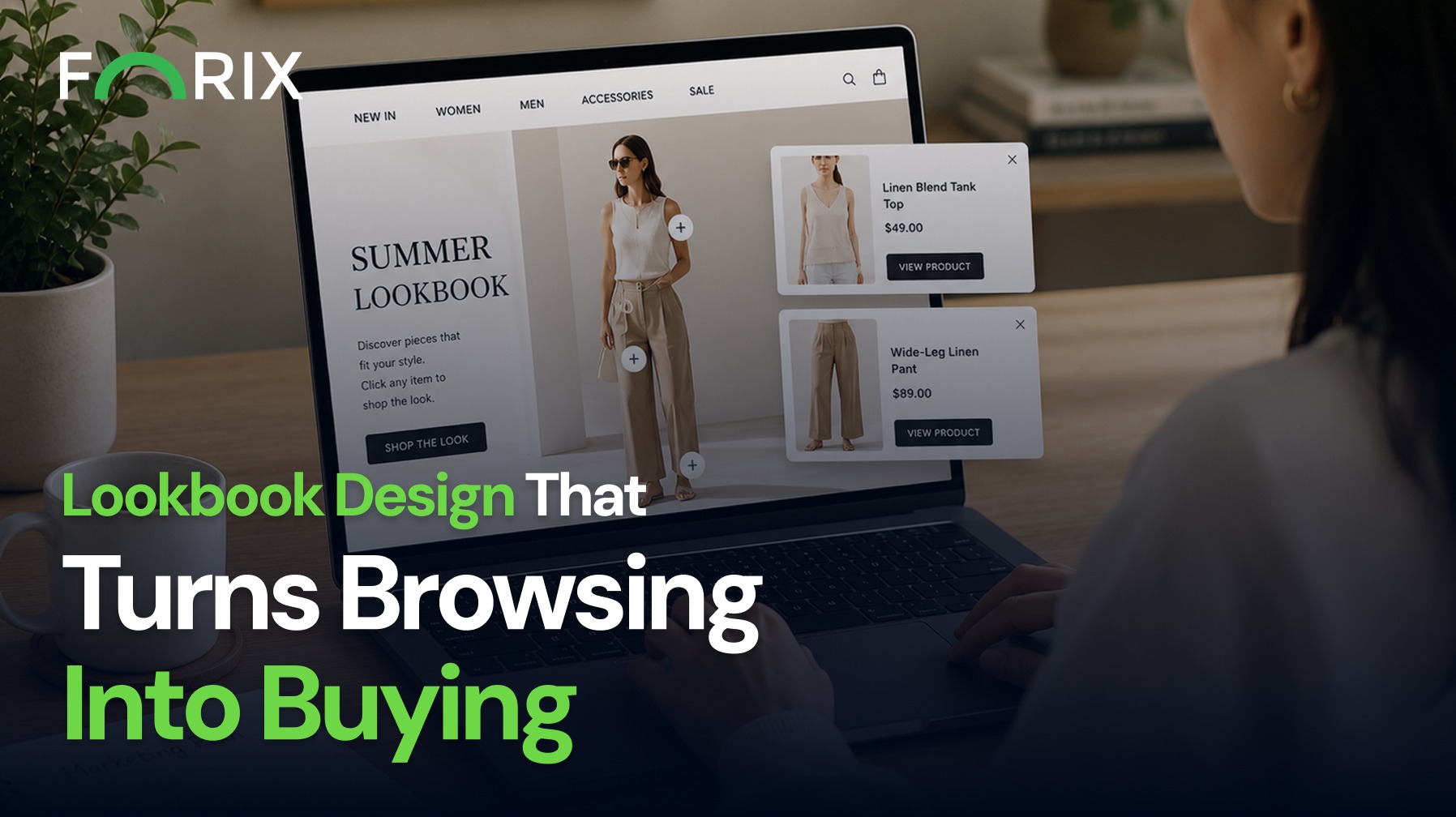
A lookbook is a curated visual experience that showcases products in real-life use, styled collections, seasonal themes, or editorial layouts. Instead of presenting products only in a grid, a lookbook gives customers context.
For example, a fashion retailer might show a complete outfit with clickable products. A furniture brand might display a styled room where customers can shop the sofa, table, lighting, and décor. A beauty brand might use a lookbook to show product combinations by routine, occasion, or skin concern.
The goal is simple: help customers see the value of the product before they reach the product detail page.
Why Lookbook Design Matters for eCommerce
Product pages are important, but they often serve customers who already have purchase intent. Lookbooks support an earlier stage of the journey. They help shoppers explore, compare, and imagine how products fit into their lives.
This matters because customers often need more than product specs. They need guidance. Strong lookbook design gives them a reason to stay engaged and a clear path to purchase.
For eCommerce stores with large catalogs, lookbooks can also reduce decision fatigue. Instead of asking customers to sort through hundreds of products, retailers can guide them through curated stories, categories, and use cases.
How Lookbooks Turn Browsing Into Buying
A lookbook becomes conversion-focused when every design decision supports product discovery. Visual appeal is important, but the experience must also be shoppable.
The most effective eCommerce lookbooks often include:
Clickable product hotspots
Customers should be able to click directly from an image to the products shown. This reduces extra steps and keeps the shopping journey intuitive.
Clear product associations
A lookbook should connect each visual scene with relevant SKUs, product names, pricing, and availability where appropriate.
Mobile-first layouts
Many shoppers browse visually on mobile. Lookbook pages must load quickly, scale cleanly, and make product interactions easy on smaller screens.
Strong visual hierarchy
The layout should guide the customer’s attention. Hero images, supporting product tiles, and calls to action should work together without overwhelming the page.
Direct calls to action
Every lookbook should include clear next steps, such as “Shop the Look,” “View the Collection,” or “Add to Cart.”
Magento Design Considerations
Magento offers the flexibility to build highly customized lookbook experiences, but design must be planned with performance and usability in mind.
Large imagery can slow down a page if it is not optimized. Interactive features can create friction if they are difficult to use. Product connections can become difficult to manage if the admin workflow is not built properly.
A strong eCommerce lookbook should balance design, merchandising, and technical implementation. Retailers should consider how products will be added, updated, and removed over time. Seasonal campaigns, inventory changes, and collection launches all require a structure that is easy for internal teams to manage.
What Makes a Lookbook Effective?
A successful lookbook does not only look polished. It supports business goals.
The best lookbooks help customers:
Understand how products work together
Discover complementary items
Explore seasonal or campaign-based collections
Move from inspiration to product detail pages quickly
Build confidence before purchasing
For retailers, this can support higher engagement, stronger cross-sell opportunities, and better merchandising control. It can also give brand teams a more editorial way to present products without separating content from commerce.
Common Lookbook Mistakes to Avoid
Many lookbooks fail because they are treated as static image galleries. A beautiful page that does not connect to products will not support sales effectively.
Common mistakes include using images that are too large, hiding product links, creating layouts that do not work well on mobile, or making the customer return to category pages to continue shopping.
Another common issue is poor maintenance. If a lookbook features out-of-stock products or outdated collections, it can create frustration instead of confidence. eCommerce retailers should plan lookbooks as active merchandising assets, not one-time design projects.
Conclusion
Lookbook design can help eCommerce retailers turn passive browsing into active shopping. When visuals, product connections, mobile usability, and clear calls to action work together, a lookbook becomes more than a brand asset. It becomes a conversion tool.
Forix helps eCommerce brands create experiences that combine strong design, smart strategy, and reliable technical execution. If your store needs a more engaging way to showcase products and guide customers toward purchase, Forix can help you build a lookbook experience designed for growth.
What is the purpose of a lookbook in an eCommerce store?
An eCommerce lookbook helps customers explore products through styled visuals, curated collections, or real-use scenarios. It connects inspiration with product discovery and makes the shopping journey more intuitive.
Can an eCommerce lookbook be shoppable?
Yes. An eCommerce lookbook can include clickable product hotspots, linked product tiles, “Shop the Look” calls to action, and direct paths to product detail pages or cart actions.
Why is mobile design important for lookbooks?
Many customers browse visual content on mobile devices. A lookbook must be responsive, fast-loading, and easy to interact with on smaller screens to support engagement and conversions.
What types of brands benefit most from lookbooks?
Fashion, home goods, furniture, beauty, lifestyle, outdoor, and specialty retail brands often benefit from lookbooks because their products rely heavily on visual context and curated presentation.
How often should eCommerce lookbooks be updated?
Lookbooks should be updated when collections, campaigns, seasons, or inventory change. Keeping lookbooks current helps avoid customer frustration and keeps merchandising aligned with business goals.
From flat sales to explosive sales growth - here's what happens when you partner with Forix
Partnering with Forix was hands down the best decision I’ve made for my store. The
redesign completely
transformed my site — it looks like a million dollars, yet I paid only a fraction of
what I expected.
Even better, sales started climbing almost immediately. Their process was simple,
transparent, and
focused on results. I only wish I had done it sooner.
Sarah Mitchell,Owner
“The free website report from Forix opened our eyes to issues we didn’t even know were costing us sales. The recommendations were clear, actionable, and backed by data. After implementing just a few of their suggestions, we saw a noticeable lift in conversions within weeks. Forix didn’t just give us a report—they gave us a roadmap to growth.”
Lena Hoffman, Director of eCommerce
“The redesign was exactly what my business needed. Clean, mobile-friendly, and conversion-focused. Sales are up 35% since launch.”
Ethan Carter, Founder
“Forix made our Magento to Shopify migration completely stress-free. Every product, customer record, and integration was moved accurately, and the new store’s design is sleek and user-friendly. Our team can now focus on growing sales instead of worrying about technical issues.”
Emily Rivera, Head of Digital Operations
198%
Conversion increase
32%
Transaction increase
30%
Time on site increase
28%
Conversion increase
92%
Revenue increase
87%
Engagement increase
Ready to See the Difference?
Your next big sales boost could start with our free website report. Let us show you the
untapped
potential in your store.
Complete the form below and our team will reach out to get started.
Thank you!
We’ve received your request for a free website report. Our team will be in touch shortly to gather a few details so we can begin your site analysis.
Click Here To
Get My Free Website Report Now
Claim Your FREE Webpage Design and Sell More ASAP
Complete the form below and our team will reach out to get started.
Thank you!
We’ve received your request for a free webpage design. Our team will be in touch shortly to gather a few details so we can begin your page redesign.
Click Here To
Get My Free Webpage Design Now
Claim Your FREE Migration Assessment and Sell More ASAP
Complete the form below and our team will reach out to get started.
Thank you!
We’ve received your request for a free Magento-to-Shopify migration assessment. Our team will be in touch shortly to gather a few details so we can begin building your comprehensive migration plan.
Click Here To
Get My Free Migration Assessment Now
Claim Your FREE Site Report and Sell More ASAP (a $2,000 value).
Complete the form below and our team will reach out to get started.
Thank you!
We’ve received your request for a free website report. Our team will be in touch shortly to gather a few details so we can begin your site analysis.