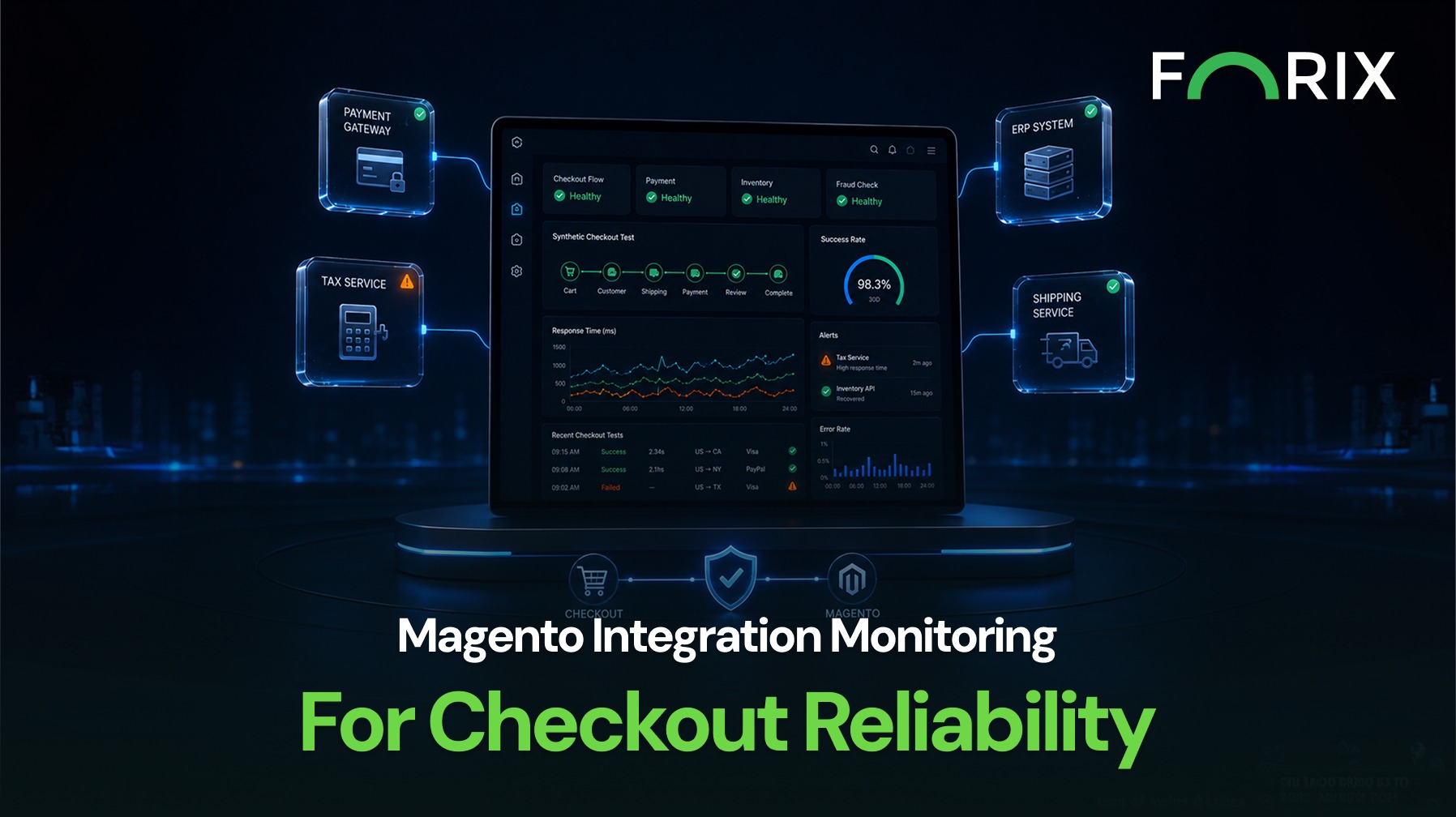
Magento is a powerful eCommerce platform, but performance problems can quickly turn that strength into a conversion barrier. When pages load slowly, checkout feels delayed, or product browsing becomes inconsistent, shoppers are more likely to leave before completing a purchase.
For Magento retailers, site speed is not just a technical concern. It directly affects customer experience, search visibility, conversion rate, and revenue. A well-maintained Magento store should support fast navigation, stable checkout, and smooth product discovery across devices.
Explore Forix’s Magento services that helps Magento merchants identify and resolve performance issues through strategic maintenance, optimization, and ongoing technical support.
Why Magento Performance Matters for Conversions
Online shoppers expect a fast and reliable buying experience. If a Magento store takes too long to load, customers may lose confidence before they ever reach the product detail page. Even small delays can create friction throughout the buyer journey.
Performance issues often affect key conversion points, including category navigation, product pages, cart updates, promotional pages, and checkout. When these areas slow down, the customer experience becomes harder to complete.
A slow Magento site can lead to:
Higher bounce rates
Lower product engagement
Fewer add-to-cart actions
More abandoned carts
Lower mobile conversion rates
Reduced customer trust
Speed also affects how users perceive the brand. A polished design and strong product catalog can lose impact if the site feels heavy, unstable, or difficult to use.
Common Magento Performance Issues
Magento performance problems usually come from a combination of platform, hosting, code, and content issues. Many retailers do not notice these problems until they begin affecting sales.
Common causes include:
Unoptimized extensions
Magento extensions can add important functionality, but poorly built or outdated modules can slow down page rendering and create conflicts.
Heavy themes or frontend code
Large JavaScript files, unused CSS, and complex frontend logic can increase load times, especially on mobile devices.
Poor caching configuration
Magento relies heavily on caching. If full-page cache, block cache, or browser cache settings are misconfigured, pages may load much slower than expected.
Large images and media files
High-resolution product images are important, but uncompressed media can hurt performance across product pages, category pages, and homepage banners.
Database inefficiencies
Over time, Magento databases can become bloated with logs, outdated records, or inefficient queries. This can slow down admin workflows and customer-facing pages.
Outdated Magento versions or patches
Older versions may miss important performance improvements, security updates, and compatibility fixes.
How Performance Issues Hurt the Magento Checkout
Checkout is one of the most sensitive areas of any eCommerce site. If the checkout process feels slow, confusing, or unstable, customers may abandon the purchase even after showing strong intent.
Magento checkout performance can be affected by payment integrations, shipping calculations, tax rules, third-party scripts, and custom modules. Each additional step must load reliably and quickly.
Retailers should pay close attention to:
Cart update speed
Shipping method loading
Payment gateway response time
Error handling
Mobile checkout usability
Third-party script impact
Improving checkout performance often creates one of the clearest paths to better conversion rates.
How to Fix Magento Performance Issues
Magento performance optimization should begin with a structured audit. Guessing at the problem can lead to short-term fixes that do not address the real source of friction.
1. Run a Technical Performance Audit
A Magento performance audit should review page speed, server response time, frontend assets, extensions, database health, caching, and checkout behavior. This helps identify whether the issue is caused by infrastructure, code, configuration, or content.
2. Optimize Caching and Hosting
Magento needs a strong hosting environment and properly configured caching. Retailers should review server resources, CDN usage, full-page cache, Redis, Varnish, and other performance layers based on the store’s traffic and architecture.
3. Review Extensions and Custom Code
Every extension should have a clear business purpose. If an extension slows down the site, duplicates existing functionality, or creates conflicts, it should be optimized, replaced, or removed.
4. Compress Images and Clean Frontend Assets
Product images, banners, JavaScript, and CSS should be optimized for speed without reducing the quality of the customer experience. Mobile performance should be reviewed separately because mobile users often face different performance constraints.
5. Keep Magento Updated
Magento maintenance should include regular updates, security patches, compatibility reviews, and testing. This helps prevent outdated code from creating performance, security, or stability risks.
Why Ongoing Magento Maintenance Is Important
Performance optimization is not a one-time project. New campaigns, extensions, integrations, product uploads, and third-party scripts can gradually slow down a Magento store.
Ongoing Magento maintenance helps retailers monitor site health, resolve issues early, and keep the platform aligned with business goals. A proactive maintenance plan can reduce downtime, improve customer experience, and support stronger conversion performance over time.
Conclusion
Magento performance issues can quietly reduce conversions, revenue, and customer trust. Slow pages, unstable checkout, outdated extensions, and poor caching all create friction that prevents shoppers from completing purchases.
The right approach starts with a clear audit, followed by targeted fixes and ongoing maintenance. Forix helps Magento retailers improve site performance through technical expertise, strategic optimization, and reliable platform support.
If your Magento store is slow, difficult to maintain, or underperforming, Forix can help identify the issues holding conversions back and build a plan to improve long-term results.
A Magento store may load slowly because of poor hosting, unoptimized extensions, heavy images, inefficient code, weak caching, or database issues. A technical audit can identify the exact cause.
Can Magento performance issues affect conversion rate?
Yes. Slow pages, delayed checkout steps, and unstable browsing experiences can cause shoppers to leave before completing a purchase, which directly lowers conversion rate.
How often should Magento performance be reviewed?
Magento performance should be reviewed regularly, especially after updates, new extension installations, major campaigns, design changes, or traffic increases.
Do Magento extensions slow down a website?
Some extensions can slow down a Magento store if they are poorly built, outdated, or conflict with other modules. Each extension should be reviewed for performance and business value.
How can Forix help with Magento performance optimization?
Forix helps Magento retailers audit performance issues, optimize site speed, improve checkout stability, review extensions, apply updates, and maintain the platform for long-term growth.
From flat sales to explosive sales growth - here's what happens when you partner with Forix
Partnering with Forix was hands down the best decision I’ve made for my store. The
redesign completely
transformed my site — it looks like a million dollars, yet I paid only a fraction of
what I expected.
Even better, sales started climbing almost immediately. Their process was simple,
transparent, and
focused on results. I only wish I had done it sooner.
Sarah Mitchell,Owner
“The free website report from Forix opened our eyes to issues we didn’t even know were costing us sales. The recommendations were clear, actionable, and backed by data. After implementing just a few of their suggestions, we saw a noticeable lift in conversions within weeks. Forix didn’t just give us a report—they gave us a roadmap to growth.”
Lena Hoffman, Director of eCommerce
“The redesign was exactly what my business needed. Clean, mobile-friendly, and conversion-focused. Sales are up 35% since launch.”
Ethan Carter, Founder
“Forix made our Magento to Shopify migration completely stress-free. Every product, customer record, and integration was moved accurately, and the new store’s design is sleek and user-friendly. Our team can now focus on growing sales instead of worrying about technical issues.”
Emily Rivera, Head of Digital Operations
198%
Conversion increase
32%
Transaction increase
30%
Time on site increase
28%
Conversion increase
92%
Revenue increase
87%
Engagement increase
Ready to See the Difference?
Your next big sales boost could start with our free website report. Let us show you the
untapped
potential in your store.
Complete the form below and our team will reach out to get started.
Thank you!
We’ve received your request for a free website report. Our team will be in touch shortly to gather a few details so we can begin your site analysis.
Click Here To
Get My Free Website Report Now
Claim Your FREE Webpage Design and Sell More ASAP
Complete the form below and our team will reach out to get started.
Thank you!
We’ve received your request for a free webpage design. Our team will be in touch shortly to gather a few details so we can begin your page redesign.
Click Here To
Get My Free Webpage Design Now
Claim Your FREE Migration Assessment and Sell More ASAP
Complete the form below and our team will reach out to get started.
Thank you!
We’ve received your request for a free Magento-to-Shopify migration assessment. Our team will be in touch shortly to gather a few details so we can begin building your comprehensive migration plan.
Click Here To
Get My Free Migration Assessment Now
Claim Your FREE Site Report and Sell More ASAP (a $2,000 value).
Complete the form below and our team will reach out to get started.
Thank you!
We’ve received your request for a free website report. Our team will be in touch shortly to gather a few details so we can begin your site analysis.